
What exactly IS coaching?

debf1a61-6cd8-4098-9d42-dcf251bfacac

Those who’ve experienced good coaching that empowered them to make the difficult changes necessary to improve their lives, have kept this relatively new profession moving and growing. Coaching websites are full of testimonials. They can explain what coaching does but few can explain what it “is” or that it is not just good leadership, leadership training or another helping profession.

Professional coaches have a different mindset and a very different approach than almost all untrained coaches, because it comes naturally to very few. Keith Webb, developer of The Coach Model, says, “To most leaders, professional coaching practices are counter-intuitive, and that’s good!”  Ha! It is good if you are a professional coach! His definition of professional coaches is, “Real coaches master 3 sets: a coaching mindset, a coaching skill set and a coaching tool set.”

Most of us would never dream of seeing someone who claimed to be a doctor if they did not have board certification. It’s just not wise.


So what kind of certifications are available for coaches? The first step is to complete a program at a school that is accredited by our national board, the Center for Credentialing and Education, or The International Coaching Federation. The student first receives a school certification and can then claim to be a certified coach. At that point, they can begin working toward the BCC or  ICF certification. Both are valid certifications. Specialty certifications can be pursued after the Life Coaching certification is gained.

So what exactly IS coaching? Coaching is working with someone who has mastered the 3 skillsets, “a coaching mindset, a coaching skill set and a coaching tool set,” so that they can achieve the results they desire.

Like finding a new doctor, certifications are crucially important, but it is only the first step to finding a coach that is right for you.


Board Certification requirements can be found on the Center For Credentialing website. 

If you want to know about my training, click the tab that says “bachelor’s degree or higher in any field” FYI, my bachelor’s was in communication.

To see the difference between therapy and coaching, check out the chart at the bottom of this article. 

Betrayal by Kim Kompel

6dbadb9e-9daf-4f9b-9aa2-8b47d0977586What to Do When You Feel Betrayed

July is a time to remember those who fought to create and preserve our freedom. We can also honor those individuals in our everyday lives who have stood up to the tyranny of self-centeredness, fought for and nurtured strong relationships. Most of us know a few individuals who choose to do what it takes to grow a marriage, a family or build a community. They often take “the road less traveled” in order for their loved ones to feel safe and that they matter. 

Acts of treason and betrayal, when the United States of America was being formed, held grave consequences for those involved and our country. Betrayal in our closest relationships can incur the deepest of consequences as well. That betrayal fractures marriages, children’s growth and development, flourishing communities and ultimately our nation’s greatest resource, each other. The crippling ripple effects of our personal choices can have epidemic, world-wide results.

Dr. John Gottman, one of the most well-respected academic researchers in the field of marriage and family and author of What Makes Love Last: How to Build Trust and Avoid Betrayal, describes 10 ways to betray a partner in addition to sexual betrayal. He explains that relationships are built on the foundation of trust, and the erosion of trust in a relationship begins in the seemingly most insignificant of moments. You choose to turn toward your partner or away from your partner when they need you most, whether you are consciously aware or not. Choosing to turn away from someone when they need your support or attention invites distrust. They no longer trust that you will be there for them. Over time, that constant turning away develops into a sense of betrayal, and ultimately a fractured marriage that lead to divorce, even in relationships that practice fidelity. The following behaviors contribute to a sense of betrayal, according to Gottman:

  1. Conditional Commitment – The underlying attitude is “I am here for you…until something or someone better comes along.” The partner is not fully in the relationship and any incident can diminish how much intimacy and support their partner receives.
  1. A Nonsexual Affair – This relationship involves a supposedly platonic relationship that a partner would be uncomfortable watching the interactions or upset with the closeness shared.
  2. Lying – Keeping secrets or not sharing the truth in order to avoid blow-ups or arguments in order to keep the peace.
  3. Forming a Coalition Against the Partner – When a partner includes outside family or friends in decisions, constantly vents or criticizes the spouse, or aligns with their parent over their spouse regarding issues, erosion of trust prevails.
  4. Absenteeism or Coldness – Instead of sharing true feelings, the partner chooses to give the cold shoulder OR emotionally not being present for the spouse when they need support or feedback.
  5. Withdrawal of Sexual Interest – A variety of reasons for not making sex a priority can lead to a sense of betrayal. Those reasons include busyness, stress, negative body image, criticism, not feeling cherished, mismatched sex drives, or physical/medical issues. When the issues are not addressed in honest, loving ways, hurt and rejection can consume the relationship, according to Gottman.
  6. Disrespect – If a partner makes another person feel inferior, uses frequent name-calling, sarcasm or implies they have the upper hand, they are being disrespectful and creating the poison of distrust in the relationship.
  7. Unfairness – Life can be unfair, but loving, long-term relationships can be havens from injustice. Mutual satisfaction only happens when neither partner feels taken advantage of and needs/wants are met equally. For example, spending, division of labor, or how free time is spent need mutually satisfying solutions.
  8. Selfishness – Happy couples understand that, at times, each will forfeit their own needs for the common good. However, resentment occurs when selflessness is not mutual.
  9. Breaking Promises – Broken promises can include, for example, secrecy or controlling of money/resources, not aligning with a mutual value established in the beginning of a relationship (like how to practice spirituality or boundaries with in-laws) or addiction.

How to Build Trust and Avoid Betrayal

  1. Create a safe place to share honestly with each other. Avoid blindly accepting hurtful behavior, shutting down or harsh retaliation and defensiveness. Also, avoid making your partner guess what is wrong. Put your feelings into words by saying how actions make you feel.  Ask each other open-ended questions that begin with the words WHAT or HOW that invite solutions. Be open, honest and unconditionally committed to mutually sharing what you both truly want for your relationship.
  2. Practice accountability and reliability. Re-establishing trust, according to Dr. Brene Brown, research professor at the University of Houston Graduate College of Social Work, author and creator of the video, Anatomy of Trust, explains that individuals need to “own your mistakes, apologize and make amends as well as do what you say you are going to do consistently.”
  3. Listen deeply. Repeat what you think you heard your partner say and allow them opportunity to clarify. Refrain from choosing to hold on to your misinterpretations of their words or behaviors. Dr. Brene Brown also suggests to give your partner the most generous interpretation of their actions.
  4. Choose calm empathy. When we choose to respond calmly, our brains stay out of fight/flight/freeze mode and can problem-solve much better. Compassion and empathy are located in the pre-frontal cortex of our brain and can be accessed when calm. The prefrontal cortex also houses our ability to reach solutions. So, take a short time-out, get calm, choose empathy and you are on the road to finding solutions that work for your relationship.
  5. Get help. Enlist the help of an objective person who is trained in relationships, such as a board certified relationship coach, to help create solutions in order to move forward and align with the vision you have for your marriage.

So, embrace the challenge to build a deeper sense of trust and avoid the pitfalls of betrayal in your marriage in order to create strong relationships within your family.  Only then will you ever know the greatest opportunities for your ultimate dream of life, liberty and the pursuit of TRUE happiness.

by Kim Kompel 

to find out more about Kim  click here.

Communicating With Seniors

a890dad2-4d73-4499-86fc-6d6e2f9ea02aCommunicating With Seniors: Where Do You Start?

by Ted Hackney

Most of my work for the past 23 years has been with people we often refer to as “senior citizens.”  These “Seniors” come in all shapes, sizes, colors and ethnicities. Their beliefs and value systems have been incredibly diverse. Many of them would resent being classified as Seniors, because they see themselves as unique, vibrant, human beings with much to offer the world. They do not want to be lumped together with a bunch of “old people.” I cannot begin to tell you how often someone aged 75 or older has referred to another person or group as “old,” making clear that he is not part of “old. Using the term Senior is simply a politically correct way to describe people who are typically aged 65 or older.

As we grow older we often need to interact with parents, relatives or loved ones who are Seniors. We may think we are merely being practical or logical when we make a statement to a Senior that somehow ends up not accomplishing what we had hoped. Our communication attempt may fail simply because we are not addressing the concerns that are truly important to that person. When we demand that another person view something as important because we think it is important, we may be creating a barrier to effective communication.  Communicating effectively with anyone, Senior or otherwise, requires that we take time to understand the forces that drive that person – what is important to them, and why.

David Solie, in his book “How to Say it to Seniors” maintains that there are two developmental drivers in Seniors that can cause conflict within themselves, and with the agendas of those with whom they interact. Specifically, Seniors are concerned with “maintaining control” and with their “legacy.” There is not enough room or time to discuss all the research available on these issues, but here are some things Solie says to consider when you are attempting to communicate with a Senior:

Desire to Maintain Control

  1. The agenda of an older person and your own will often be very different. Frustration, impatience, anger, sarcasm, scolding or manipulating with guilt (bullying) will not accomplish what you want. These behaviors on your part often make future interactions with a senior even more difficult.
  2. Needing your help while still wanting to be someone you look up to can be a confusing role for a Senior. They usually do not want to ask for help and often see themselves as people who should be helping you, the younger person who in the past needed guidance or direction. This role reversal, relying on younger people can be almost embarrassing to a Senior. 
  3. Don’t fight, facilitate – ask what you can do to help a Senior to accomplish what they want. This means you must actually ask the question, “What would you like to happen (with this situation)” or “Tell me what to do to (accomplish what the Senior wants).” Often, people, not just Seniors, will become more cooperative when they realize you are listening and they will also realize that they do not really know what they want. They just don’t want to be “forced” to do anything.
  4. Back Off – give Seniors room to make a decision, ask questions, resolve their feelings. This is not unique advice. It is respectful behavior when communicating with our spouses, friends, employees, bosses, or pretty much anyone. People often have trouble with decisions when they feel pressured.

Desire to Establish A Legacy

  1. Seniors want to figure out what their lives meant. The classic questions asked in plays and philosophy throughout history are often on the minds of Seniors – “who am I?” and “why am I here?” They want to know “how will I be remembered?
  2. As Seniors review their lives they will often focus on things that seem unimportant to you, or they may remember events very differently than you do. The key for good communication is not to correct their perceptions, but to try to understand their need to make sense of their lives. We have all heard the expression that “Dad has mellowed,” which may only mean that he is rethinking the things that are actually important to him now.
  3. Looking backward is required for most Seniors to achieve peace. As they approach the uncertainty of death they need to be comfortable with the legacy they are leaving.                

by Ted Hackney

To find out more about Ted Hackney click here.

Inspiration, Motivation, Discipline, Great Habits – repeat process

InspirationWhen we are motivated, disciplined and develop good habits around an idea that inspired us, we do great things. Why is it that, very often, we get an idea and feel SO inspired, but nothing ever comes of ‘it’? Maybe you’re like me and you manage to make something of it, but after a while you get bored, decide it’s too much work or it just doesn’t bring much satisfaction.

If you look at steps 1-4 as building blocks, where is it that you habitually fall off the wagon?

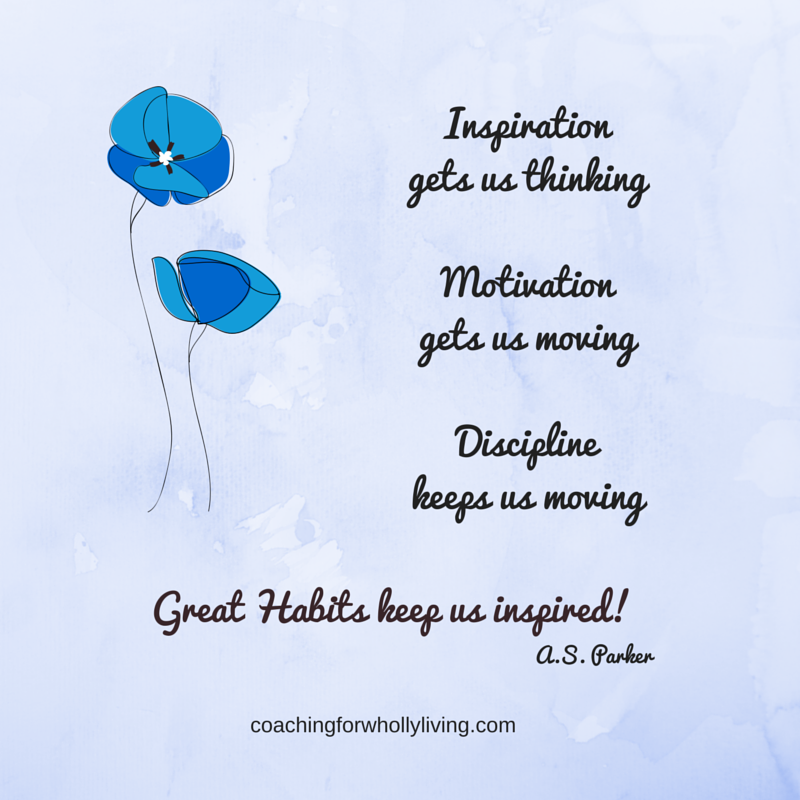
1. Inspiration gets us thinking.  2. Motivation gets us moving.  3. Discipline keeps us moving. 4. Great habits keep us inspired.

Of course, we do not have the time, resources or manpower to act on every good idea we have, but when we are truly inspired we contemplate and scheme about how to make ‘it’ happen. We think about ‘it’ a lot, and though we are not conscious of this, even as we sleep our brain organizes our thoughts and ideas (according to world renowned brain researcher, Dr. Caroline Leaf). Our brain literally begins acting on our inspiration. It’s only then that we have the motivation to get our ‘it’ off the ground.

I habitually fall off the wagon just after I’ve reached step #3.  I get motivated and get the ball rolling. Sometimes, if I’m enjoying the process, I’ll develop the discipline to keep the ball rolling. As we all well know, there are pieces of everything we do that don’t bring us a ton of joy. We just want the end result!! It’s when I forget about how good the end result be, and allow my focus to get locked in on the duty of discipline, that I lose heart. I begin to feel like the duty IS the result of my inspiration. How silly!!

On the other hand, when I push through the dutiful, sometimes painful part of discipline, I slowly begin to enjoy the new habit because I can see ‘it’ coming to fruition.

Becoming aware of what gets me off track has helped me persevere and enjoy the benefit of inspiration that comes through a good habit. What does that look like?

Fortunately, the painful part of discipline doesn’t normally last forever because when we begin to see ‘it’ materializing we are inspired once again. Whether it’s playing an instrument, creating great relationships, writing a book, or reaching a career, political or humanitarian goal – to stay inspired, we must decide that it’s worth the effort. The skills of a great pianist slip if they do not play the piano regularly, but what once was a dutiful discipline is a creative outlet they now enjoy. Likewise, a relationship loses vitality when effort wanes but because it brings great joy it becomes easy to nurture.

Once we make these “great habits” part of our everyday life, we experience the joy of what they produce and that keeps us inspired!

What’s Your Reality?

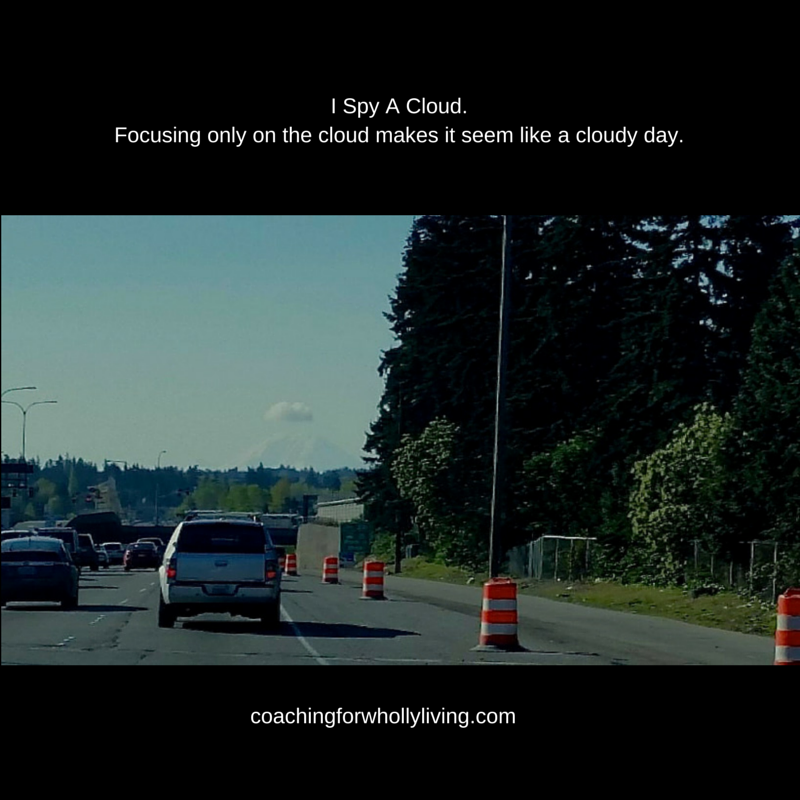
single cloud


What we focus on becomes our reality. ‘Our reality’ is what we believe is real, even if it is not. By broadening our focus we gain the ability to see God’s reality. Open your eyes and you’ll see blue skies!